Resume Fraud Red Flags: A Practical Checklist for Hiring Managers
Resume Fraud Red Flags: A Practical Checklist for Hiring Managers
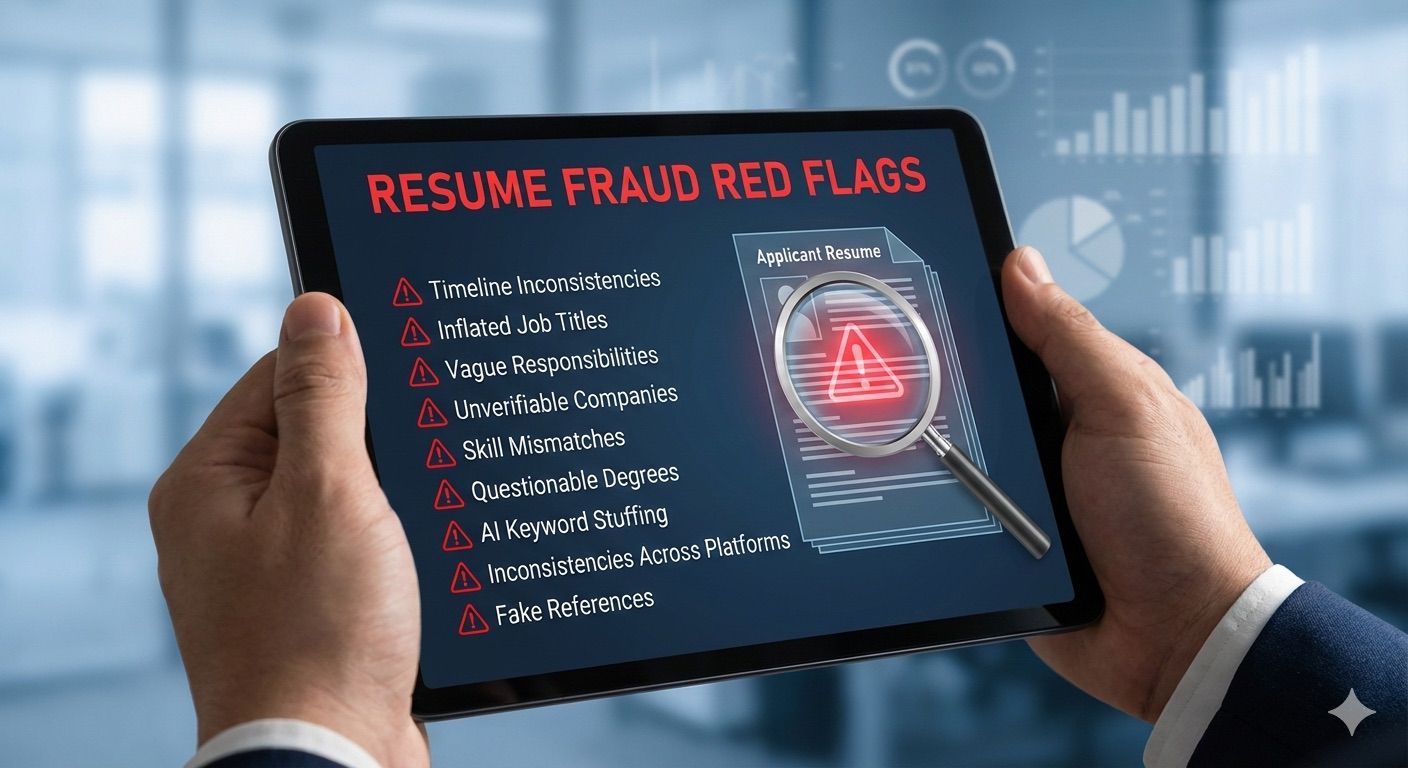
Resume fraud isn't an edge case anymore. Remote hiring, AI-generated resumes, and professional fake reference networks have turned it into a systemic problem. More than half of hiring managers say they've caught candidates lying—yet most fraudulent resumes still lead to job offers.
Here's what to look for.
Timeline Problems
Overlapping roles, unexplained gaps, short tenures, career progressions that don't add up. Compare resume dates against LinkedIn. Ask candidates to walk through their history chronologically. When something's off, request documentation.
Gaps aren't the problem—vague explanations are. Honest candidates explain gaps clearly. Fraudulent ones deflect.
Inflated Titles
"Senior" or "Lead" titles without evidence of team size, scope, or decision authority. Title inflation slips past automated screening because it's subtle.
Ask about direct reports and team structure. Probe for specific leadership examples. High performers exceed expectations, but they don't invent titles.
Vague Impact
"Responsible for," "involved in," "managed"—without outcomes or metrics. Real candidates articulate what changed because of their work. Fraudulent resumes stay vague to avoid scrutiny.
Ask for numbers, timelines, scale. Follow up: "What happened as a result?"
Unverifiable Employers
No website, no LinkedIn presence, unclear business records. "Small startup that shut down" isn't proof of anything.
Search business registries. Check LinkedIn company pages. Request payroll documentation when needed.
Skill Mismatches
Skills that don't match work history, or sudden leaps into advanced domains without explanation. Often just ATS optimization, not real experience.
Ask where and how they used each skill. For technical roles, have them demonstrate fundamentals.
Questionable Credentials
Unknown institutions, suspicious accreditation, degrees earned impossibly fast. Diploma mills are cheap and common.
Confirm accreditation through official bodies. Contact registrars directly. When credentials matter for compliance, verification isn't optional.
AI-Generated Content
Resumes mirroring job descriptions word-for-word, buzzword repetition, unnatural phrasing. The issue isn't AI assistance—it's fabricated experience behind polished language.
Ask candidates to expand verbally. Real experience holds up in conversation.
Cross-Platform Inconsistencies
Mismatched titles, dates, or responsibilities between resume and LinkedIn. Shifting narratives during interviews.
Review both side by side before talking. Revisit claims later in the conversation. One mismatch might be accidental—a pattern isn't.
Evasive Responses
Rehearsed answers, vague reference praise, inability to discuss failures. Dishonest candidates avoid specifics or over-explain when cornered.
Ask about something that went wrong. Push for detail. Ask references if they'd rehire.
Fake References
Personal emails, references who can't speak to actual work, inconsistent answers. Professional fake reference services are widely used.
Source contact details independently. Ask role-specific questions, not character assessments.
Quick Reference
Before interviews: Cross-check resume and LinkedIn. Verify employers exist.
During interviews: Walk through timelines. Probe for metrics. Ask about failures.
Reference checks: Verify contacts independently. Ask if they'd rehire.
Before start: Complete background checks. Verify credentials directly.