1 in 4 Candidates Will Be Fake by 2028. Here's What to Do About It
1 in 4 Candidates Will Be Fake by 2028. Here's What to Do About It
1 in 4 Candidates Will Be Fake by 2028. Here's What to Do About It
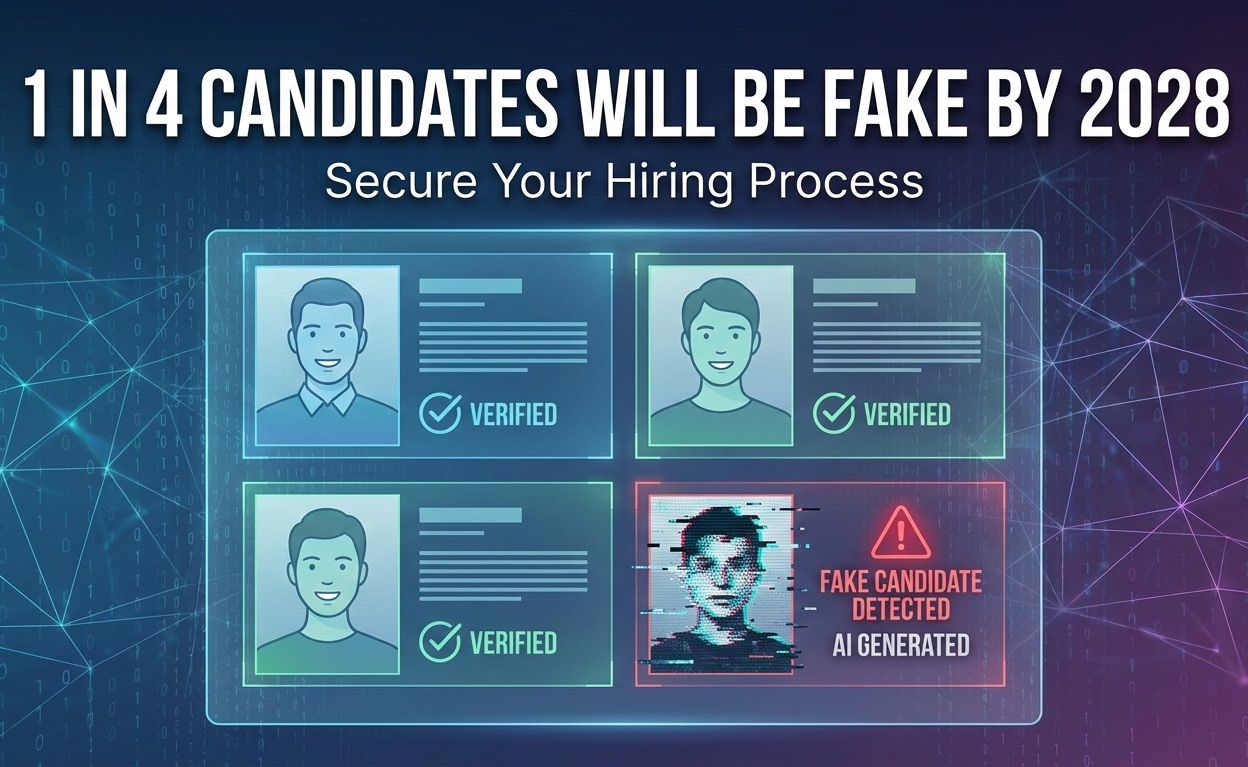
Gartner predicts that by 2028, one in four job candidates could be fake. Not exaggerated resumes or minor embellishments—entirely fabricated identities built from synthetic profiles, stolen documents, and AI-assisted deception.
This isn't hypothetical. Companies have already hired "engineers" who turned out to be overseas operators accessing laptops through intermediaries. In most cases, the fraud was discovered after system access was granted.
The uncomfortable reality is that most hiring pipelines prioritize speed over verification. And video interviews alone aren't the filter they used to be.
Why Traditional Hiring Falls Apart
Modern hiring rests on assumptions that no longer hold: that the person on the call is who they claim to be, that the resume reflects real experience, and that interviews can validate both identity and competence.
AI has made it trivial to generate polished resumes, create LinkedIn profiles with synthetic photos, coach candidates in real-time during interviews, or send a proxy instead of the actual applicant. By the time someone reaches an interview, they've already cleared multiple weak filters. That's why verification needs to happen earlier—before you've invested interview time, not after onboarding.
Where Fake Candidates Show Up
They target roles that offer remote work, high pay, system access, and fast hiring cycles. IT, engineering, finance, and ops get hit first, but the pattern is spreading to any position hired remotely.
And it's not always sophisticated espionage. Often it's simpler: one person interviews while another does the job, friends rotate identities, or candidates lean on real-time AI assistance and fall apart once they're on the team. Either way, you don't actually know who you hired.
The Core Mistake: Verifying Too Late
Most companies check identity after interviews, sometimes right before the offer. That's backwards.
Once you've invested interviewer time, gotten excited about a "strong candidate," and started discussing compensation, there's pressure to move forward even if something feels off. Verification works best before that commitment, when you can evaluate signals objectively.
Three Checks That Catch Most Risk
You don't need an investigation. You need three quick checks before the first serious interview.
Identity and liveness. Confirm a real government ID exists, the person submitting it is physically present, and their face matches the document. This filters out stolen identities, static photos, and deepfakes without real liveness. If someone can't prove who they are early on, there's no reason to interview them.
Timeline coherence. Compare the CV against LinkedIn, education dates, and employment history. Fraud often falls apart when timelines don't line up. Watch for inflated titles at tiny companies, vague achievements, overlapping jobs that don't make sense, and that generic AI-flat writing style. Real careers have gaps and pivots—but they're explainable.
Proxy signals. Many fake candidates don't work alone. Look for reused phone numbers or emails across applicants, metadata mismatches in documents, friction around verification requests, and unnatural pauses during early calls. None of these prove fraud on their own, but together they're strong indicators.
When Something Flags
Verification isn't about rejection—it's about clarity. When risk appears, ask specific follow-ups about one concrete project, re-run identity checks, and delay interviews until inconsistencies are resolved. Legitimate candidates appreciate the transparency. Fraudsters disappear.
The Bigger Picture
Hiring fraud doesn't just create security risk. It erodes trust in remote hiring, wastes interviewer time on fake profiles, and damages team morale when bad hires slip through.
The best hiring teams aren't paranoid. They're consistent: verify identity early, check coherence before commitment, surface risk before interviews. That's not bureaucracy—it's how hiring works now.
If you can't answer "do we know who this person is?" before the first interview, your pipeline is already exposed.